Will you get into my account and change something there?
⌄
No, the portal only reads — it cannot write to Google Ads at all. But the Google Ads API has no separate read-only access: the same access is granted for both reading and writing, so the list of permissions on Google's screen sounds broader than what the portal does. If you would rather not hand that over — sign in with a Google account that holds the Read only role in your account: the portal inherits its permissions and cannot change anything, even in theory.
How to grant the Read only role
Will the portal write to me when something happens?
⌄
Not today: you open the section yourself. Regular email summaries and an alert on serious problems are part of the Scale plan, and it is still in development. We won't promise them as working.
How does the portal know who made the change?
⌄
From the Google Ads log itself: it records the author of every change. The portal splits them into three sides — the GetProfit team, your side and Google's automation. It shows automation's changes but doesn't assess them: those are Google's own decisions, not anybody's — there is no one to judge here.
Are you sure it is the change and not the season?
⌄
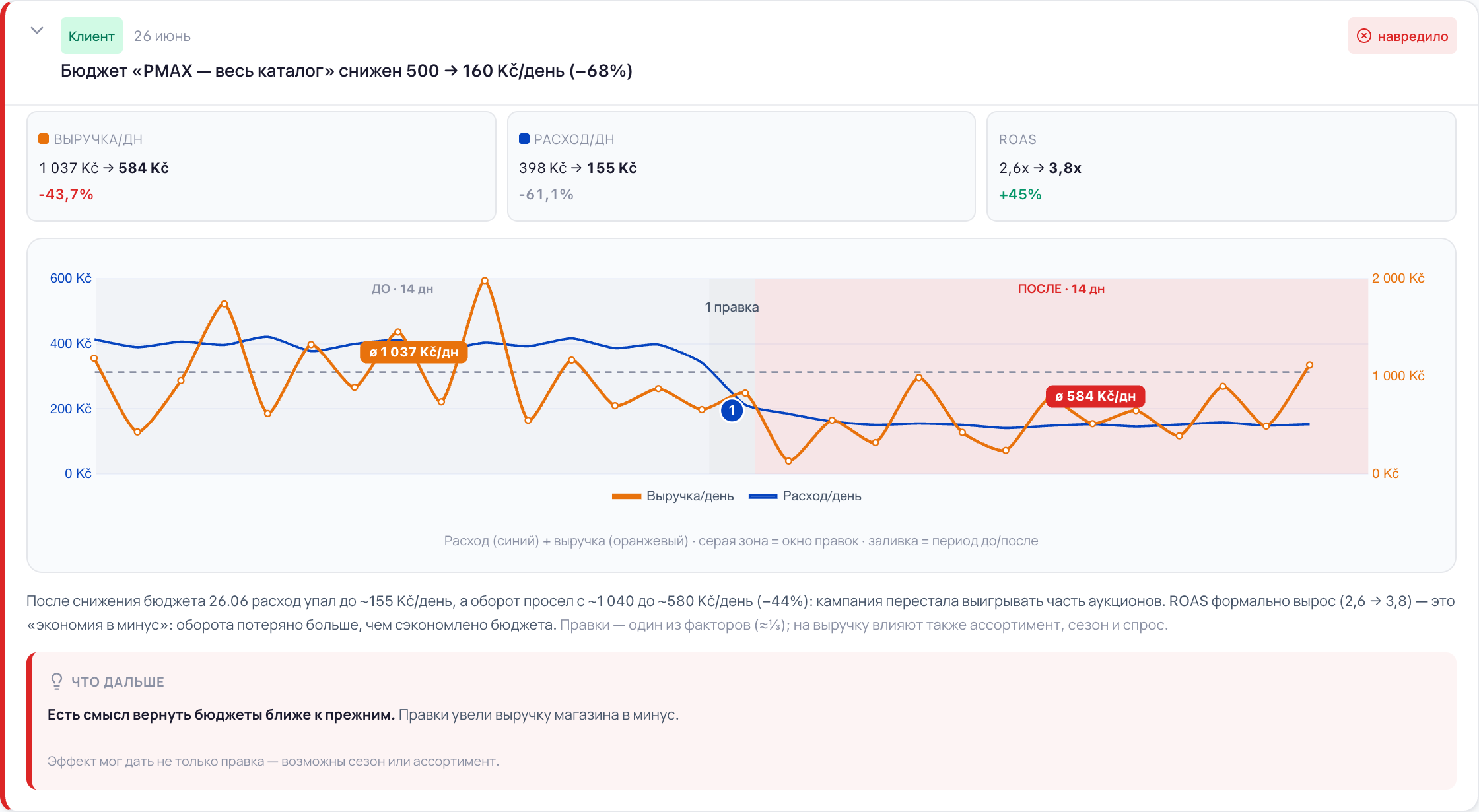
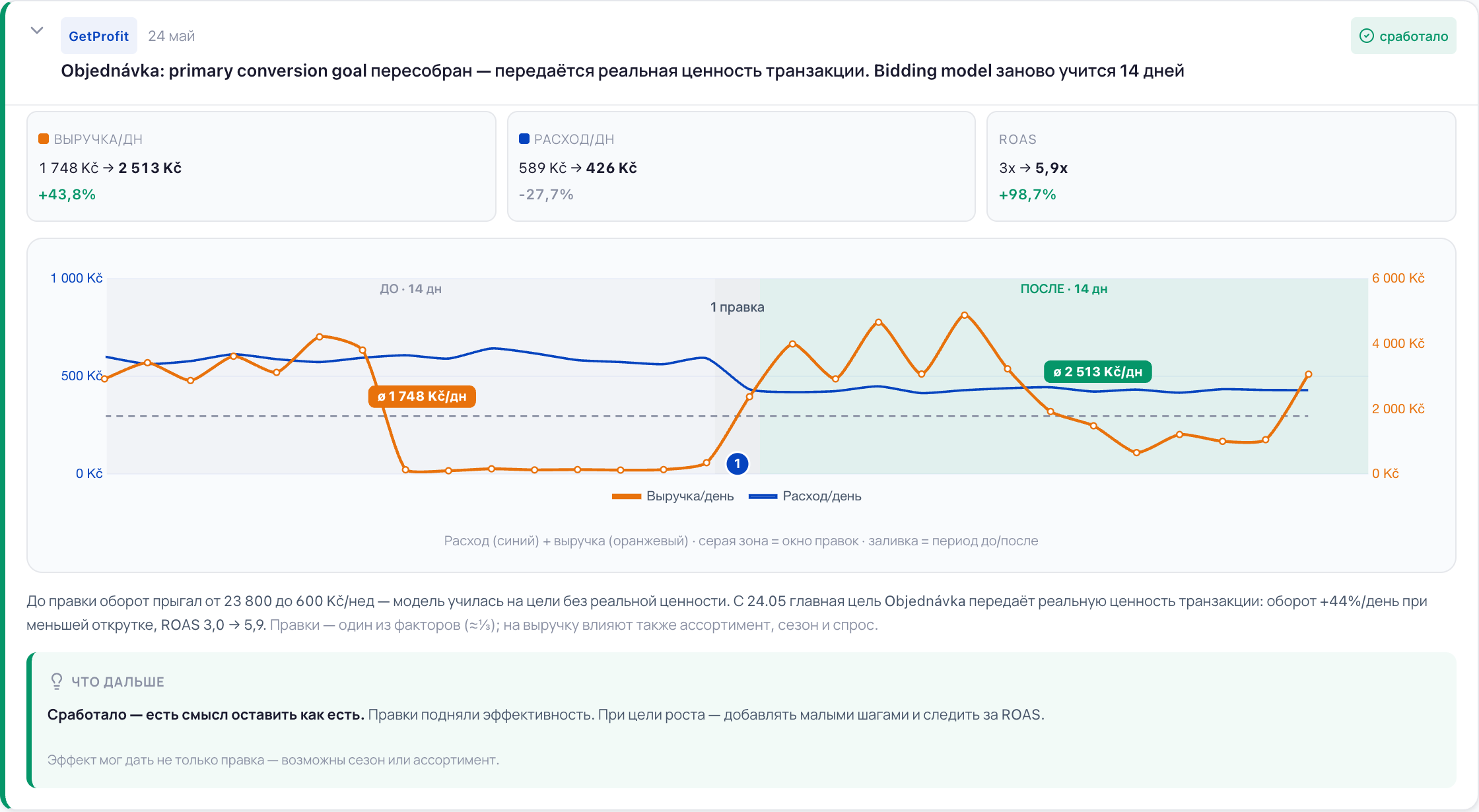
We aren't sure — and we don't pretend to be. The portal shows a link in time, it doesn't prove a cause: under every conclusion there is a caveat that the effect may not have come from the change alone. If another significant change fell into the same window, it says the effects may mix. The decision is still yours — but now you see both sides.
An agency runs my ads, it reports to me anyway
⌄
Then the conversation will run on one set of data. The portal doesn't pass sentence on your contractor: it shows what was changed and how it ended, and it will show just as clearly when everything is fine. It also sees the changes that don't usually make it into a report — the small and frequent ones.
I have a small shop, there are hardly any changes
⌄
Then the feed will be short, and that is a normal answer. The section doesn't invent events: if nothing significant happened in the period, it says so.